


our
innovation

HYALURONIC ACID
With over 55 years of research and development, Fidia has become a leader in producing both natural and functionalized hyaluronic acid for various medical applications.
Hyaluronic Acid: A Cornerstone in Ophthalmology

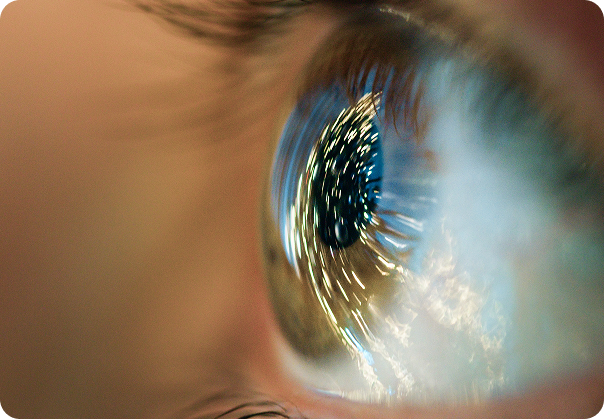
Mechanism of Action on the Ocular Surface
Topically applied HA exerts multiple beneficial effects on the ocular surface:
- Prolonged hydration through high water-binding capacity
- Tear film stabilization via mucoadhesive properties
- Mechanical protection against shear stress during blinking
- Support of corneal epithelial healing and regeneration
- Modulation of inflammation, depending on molecular characteristics
Why Molecular Weight Matters
Not all hyaluronic acids are biologically equivalent. Molecular weight (MW), together with polydispersity index (PDI) and viscosity, critically influences the clinical performance and safety of HA-based ophthalmic formulations4
- Low molecular weight HA has been associated with pro-inflammatory signaling and may exacerbate ocular surface inflammation.
- High molecular weight HA, within a controlled and narrow range, demonstrates anti-inflammatory effects, enhanced lubrication, and superior ocular surface protection.
Selecting an HA with an appropriate and well-defined MW range is therefore essential to ensure optimal biocompatibility and therapeutic efficacy.


FHA 1.0®: Hyaluronic Acid
Engineered for Ophthalmology
FHA 1.0® is the first patented hyaluronic acid specifically designed for ophthalmic use. It consists of pharmaceutical-grade HA, characterized by a high degree of purity and a controlled molecular weight range of 1.1–1.7 MDa.
This molecular profile has been developed to achieve:
- Optimal viscoelasticity for sustained ocular surface residence time
- Excellent hydration capacity without visual disturbance
- High biocompatibility with corneal and conjunctival tissues
Clinical Relevance in Dry Eye Disease5
Tear substitutes formulated with FHA 1.0% at concentrations of 0.15% and 0.30% combined with amino acids
Re-Epithelialization and tissue repair
Effective symptom relief across different severities of DED
High tolerability with repeated daily use
Advancing Eye Care through a complete product portfolio
Evidence-based solutions designed to support clinical excellence
References:
1. Huerta Ángeles G, Nešporová K. Hyaluronan and its derivatives for ophthalmology: Recent advances and future perspectives. Carbohydrate Polymers. 2021;259:117697.
2. Salzillo R, et al. Optimization of hyaluronan-based eye drop formulations. Carbohydr Polym. 2016;153:275–283.
3. Ang BCH, et al. Sodium Hyaluronate in the Treatment of Dry Eye Syndrome: A Systematic Review and Meta-Analysis. Sci Rep. 2017;7:9013.
4. Aragona P, et al. The role of hyaluronic acid in the treatment of ocular surface disorders. Clin Ophthalmol. 2014;8:1–7.
5. Aragona P, Rania L, Roszkowska AM, et al. Effects of amino acids enriched tear substitutes on the cornea of patients with dysfunctional tear syndrome. Acta Ophthalmologica. 2013;91(6):e437–e444. doi:10.1111/aos.12134.